
Does stress cause neck pain? The short answer is no! At Bolduc Physical/Aquatic Therapy & Sports Medicine, we like to say “contributes to” instead of “causes.” The casual way healthcare professionals throw around terms can lead to confusion and, worse still, ineffective treatment. Fortunately, our highly skilled therapists know how to dig deep and find the root cause of your neck pain, and this information helps you find relief!
Let’s discuss Nicole, a 40-something-year-old working mother of three. Nicole was used to being very active, balancing her work schedule with getting her kids to all the various activities and school functions that come with being a mom nowadays.
Her neck pain first started as a crick in the neck when she woke up one morning. As the day progressed from driving her kids around to sitting at her desk, she noticed that turning her head became more difficult and painful, making focusing on work nearly impossible.
Nicole struggled to figure out why her neck started hurting and came to the conclusion that stress “must be” the culprit. The more pain and difficulty moving she had, the more convinced she was that stress was to blame.

Understanding Nicole’s Neck Pain
One of the most common things we hear from our patients is that their pain started for “no apparent reason.” Like Nicole, people will wake up with a crick in their neck or notice a stiffness turning when driving in the car. It is also common for people to notice tightness in their upper back and neck after a long day.
So, what is actually the source of the pain? In most cases, there is an issue with the neck joints or the neck muscles due to prolonged positions. Our neck joints don’t like remaining in any position for extended periods. In Nicole’s case, she first noticed her pain in the morning, which may have been related to her neck position while sleeping. It is also important to note that in Nicole’s case, the first sign of any issue was in the morning when she woke up, unrelated to stress.
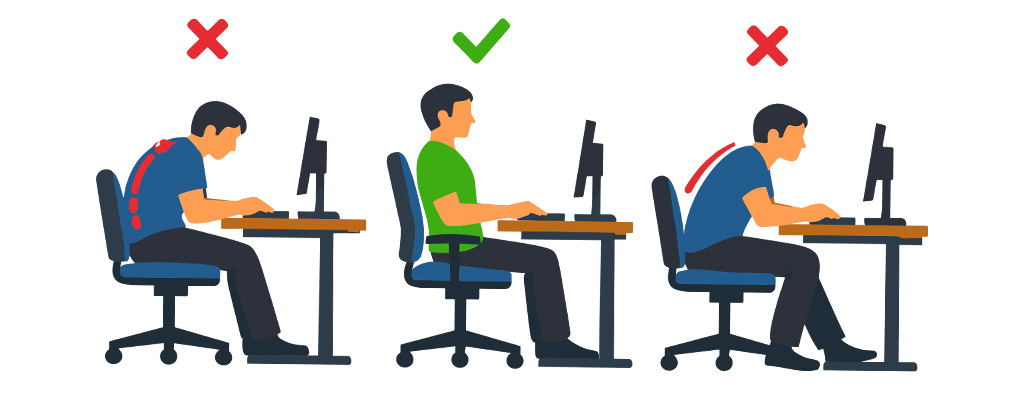
As Nicole’s day progressed, her pain got worse. But this also was more likely related to how she held her neck while driving or sitting at her computer. In both cases, her posture, specifically how she held her neck, seems to have contributed to her pain. Prolonged sitting can lead to a forward head position, resulting in tension to soft tissue (i.e., muscles, tendons, and ligaments) or negative changes to our blood flow.
The muscles of our neck function best when we move them. So, holding her head in one position likely led to irritation of the muscles and affected her ability to move her neck, which in turn caused stress.
Stress “contributes” to neck pain because, when we experience stress, our bodies naturally respond by tensing up as a protective measure. This tension can lead to discomfort, particularly in the neck and upper back region. Research studies have found that individuals with higher stress levels reported increased neck pain as compared to those with lower stress levels. This is why we say “contributes” to, but not the cause of, neck pain.
How Physical Therapy Can Help Alleviate Neck Pain
We will target the source of your pain by performing a thorough examination, starting with your medical history and details about how, when, and where your symptoms began. As we saw with Nicole, determining how, when, and why the pain started helps us eliminate possibilities and get to the actual root cause(s).
Our therapists will also analyze your posture and movement to identify any limitations or restrictions contributing to your condition. We’ll use this information to design a program that addresses your specific needs.
Our treatment plans focus on relieving your pain and improving your posture, mobility, strength, etc., and educating you about managing your symptoms. Your program will likely include manual therapy (i.e., soft tissue work and/or joint mobilizations), targeted stretches, exercises, activity modification, or posture recommendations.
We’ll listen to your unique situation and specific issues and then work to help you find relief and get back to your normal routine.
Book Your Appointment Today!
If you’re dealing with neck pain or looking for someone to help you figure out what is causing your issues, call us today and set up a consultation!
Schedule an AppointmentThreading the Needle
Shoulders • Upper Back • Spine Rotation
Start on your hands and knees in a tabletop position. Slide one arm underneath your body, palm facing up, allowing your shoulder and the side of your head to gently rest on the floor. Feel the stretch through your upper back and shoulder. Hold briefly, then return to the starting position and switch sides.
3 Sets, 30-Second Hold (each side)
Materials needed: floor mat
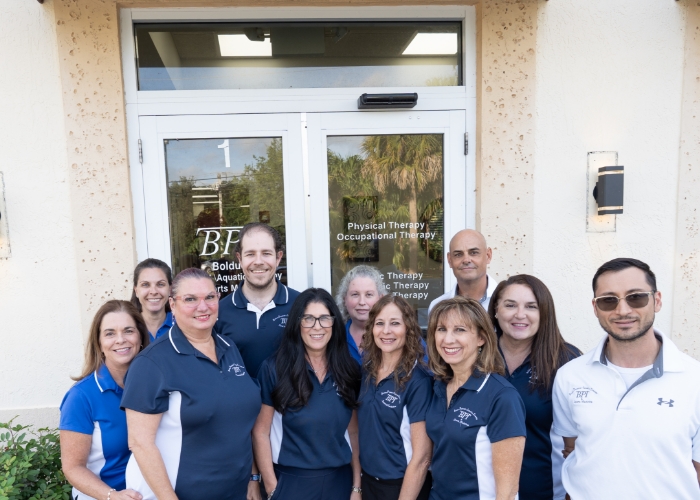
Our Team Is Ready To Help
“I’ve been consistently attending the Bolduc aquatic therapy program with Bryan since October of last year and I have been making significant improvement with my mobility and gait. I appreciate Bryan’s approach to physical therapy because it allows me to truly challenge myself at my own pace. I’m able to address the weaker muscles that are compensating through strengthening while also maintaining and improving my stronger muscle groups. Bryan supports and encourages my improvement and continues to add to my aquatic exercises in order to create a dynamic program that is custom suited to my needs and goals.
Being in the pool is one of my favorite parts of my week. I always feel better than when I first arrived, especially after the spinal decompression. So grateful for Bryan and the Bolduc team for helping me improve my quality of life!”
— Tanya

Michelle Raspler
Front Desk Coordinator
Michelle is originally from Long Island, NY. She moved to Florida 27 years ago and loves the warm weather here. She worked in an Internal Medicine office before joining us here at Bolduc Physical Therapy. Physical Therapy has always been an interest to her and she enjoys seeing patients improve on a day to day basis.
When not at work, she enjoys spending time at the beach and being with family, friends, and her little Yorkie.
View All StaffYou Don’t Need a Doctor’s Permission Slip to Start Feeling Better
Not everyone knows this, but if you’re dealing with pain or an injury—new, old, or “I’ve-had-this-forever”—you can go straight to a physical therapist. Yep, in all 50 states! That means you can book an appointment with one of our amazing therapists and get help sooner rather than later.
This magical little thing is called Direct Access. In simple terms? It means you can see a physical therapist when you want, without first visiting a physician or medical provider. Physical therapists are trained to assess and treat injuries on their own, and they do it every day.
Start the New Year Moving Better
A new year is the perfect time to stop putting up with nagging pain, stiffness, or an injury that never fully healed. Whether you want to get back to the activities you love or simply feel better in your everyday life, our team at Bolduc Physical/Aquatic Therapy & Sports Medicine is here to help you get there.
We’ll work with you to build a personalized plan around your goals, so you can start the year feeling stronger, moving easier, and living with less pain.
Schedule an Appointment
A personalized plan built around your goals
One-on-one, hands-on care from our therapists
Support for pain, injuries, and mobility concerns
Recovery is more than therapy—it’s a partnership
Ingredients
- 1 unbaked 9-inch deep-dish pie crust
- 1 can (15 oz) pumpkin puree (not pumpkin pie filling)
- ¾ cup granulated sugar
- 1 tsp ground cinnamon
- ½ tsp ground ginger
- ¼ tsp ground nutmeg
- ¼ tsp ground cloves
- ½ tsp salt
- 2 large eggs
- 1 can (12 oz) evaporated milk
- Whipped cream, for serving (optional)
Instructions
- Preheat oven to 425°F. Place the unbaked pie crust in a 9-inch pie dish and crimp the edges.
- In a small bowl, stir together the sugar, cinnamon, ginger, nutmeg, cloves, and salt.
- In a large bowl, beat the eggs lightly. Stir in the pumpkin puree and the spice mixture until combined.
- Gradually stir in the evaporated milk until the filling is smooth.
- Pour the filling into the pie crust.
- Bake for 15 minutes at 425°F. Reduce the oven temperature to 350°F and bake for another 40-50 minutes, until a knife inserted near the center comes out clean.
- Cool the pie on a wire rack for at least 2 hours before slicing. Serve with whipped cream, if desired, and enjoy!